AI temperature check · updated May 2026

The water is getting warmer. AI is already changing everyday life.

Not in one dramatic sci-fi moment. In email drafts, school essays, customer service scripts, hiring filters, code, images, search results and quiet decisions you may never see.

Boiling Frogs turns that slow heat into clear signals: what changed, why it matters, and what to watch before “normal” has already moved.

Photorealistic green frog with bulging eyes surrounded by circuit boards, fibre-optic cables and glowing AI technology
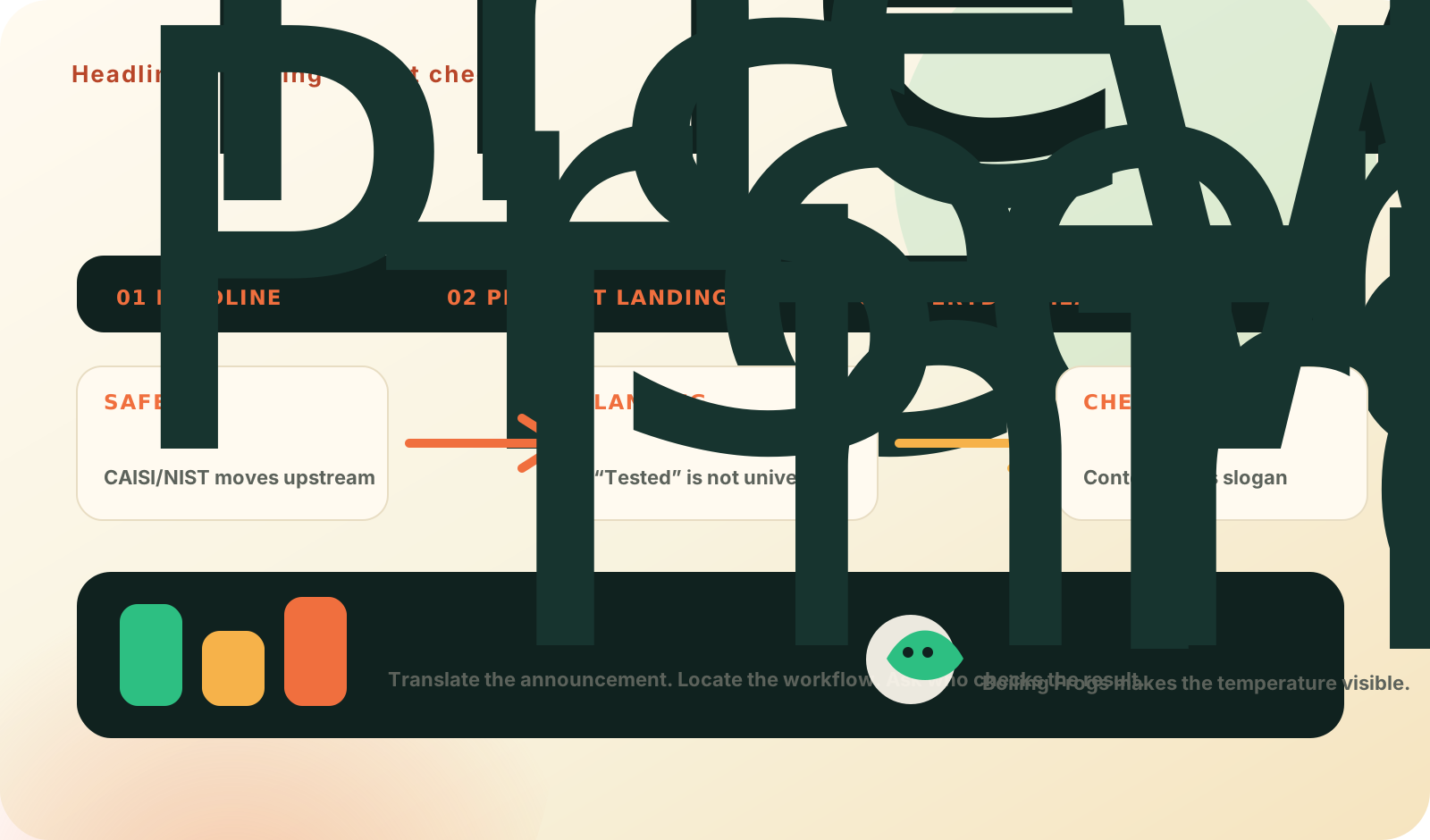
Editorial Boiling Frogs infographic showing AI changes warming everyday life through safety testing, work tasks and infrastructure footprint
A visual heat map for reading AI headlines by where they land in real life.
Today’s AI news lens

Do not ask “is this impressive?” Ask “where does this heat land?”

A nightly editorial compass for readers who do not live in AI news: one safety signal, one work signal, one infrastructure signal — each translated into a plain-English heat check.

Safety signal pre-release access

Government evaluators are moving into the frontier-model test room before public launch.

Translate “tested” carefully: it may mean national-security or misuse checks, not a guarantee that the feature is wise for a classroom, hiring desk or family phone.

When a lab says a model was evaluated, ask what was tested, by whom, and what remained outside scope. NIST / CAISI · May 2026 ↗
Work signal 36% of occupations

AI is already showing up in at least a quarter of tasks across more than a third of occupations.

The useful unit is not “job replaced”; it is “task quietly rerouted” — first draft, summary, comparison, triage, reply, analysis.

Map one workflow this week and mark where AI drafts, ranks, filters, recommends or acts before a person signs off. Anthropic Economic Index · 2025 ↗
Infrastructure signal 460 → 945 TWh

Data-centre electricity demand could roughly double from 2022 levels by 2030.

The chatbot feels weightless because the heavy machinery is off-screen: chips, cooling, grid planning, water and platform contracts.

Follow where “free” intelligence becomes a local bill, an energy bottleneck or a new dependency on rented infrastructure. IEA Energy and AI · 2025 ↗
Now-field guide

Three current AI signals, translated into everyday consequences.

This nightly layer makes the homepage feel less like a static explainer and more like an editorial desk: source-backed numbers, plain-English analogies and a practical “use this tomorrow” question.

Boiling Frogs field guide showing three current AI signals: safety testing, task creep and physical footprint
Bespoke Boiling Frogs SVG: a compact field guide for reading current AI news as everyday heat.
NIST / CAISI · May 2026 ↗
Safety testingpre-release access

AI labs are treating evaluation as a launch-gate, not a press-release footnote.

Like a food inspector entering the kitchen before the restaurant opens, the important question is what they were allowed to inspect — and what stayed behind a locked door.

Use this tomorrow When a product says “tested”, ask whether that means misuse and national-security checks, or whether someone tested the classroom, workplace and family-use cases readers actually face.
Anthropic Economic Index · 2025 ↗
Task creep36% of occupations

The job title may stay still while the work inside it is quietly rearranged.

It is less like a robot taking a desk and more like invisible interns appearing in the first-draft, triage, comparison and summary steps.

Use this tomorrow Map one real workflow: where does AI draft, rank, filter, recommend or act before a human signs off?
IEA Energy and AI · 2025 ↗
Physical footprint460 → 945 TWh

The answer box is starting to look like a utility with pipes, power and bottlenecks.

The chatbot is the tap; data centres, chips, cooling and grid planning are the plumbing hidden in the wall.

Use this tomorrow Watch where “free” intelligence becomes a local infrastructure bill, a supply-chain constraint or a new platform dependency.
Reader radar

Do not track model names. Track where the headline will land.

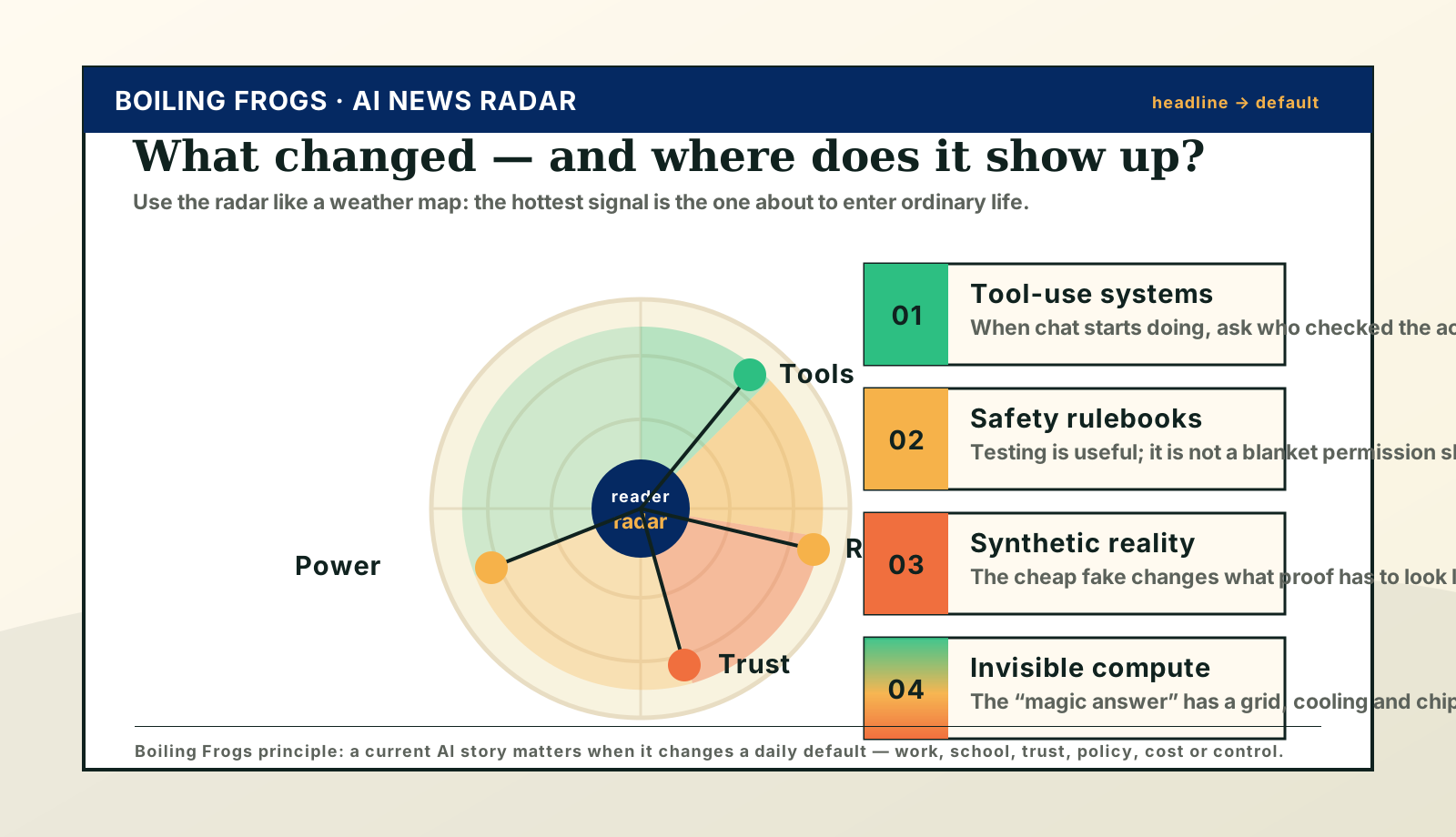
A sharper nightly lens for “current AI news”: each item turns a broad development into a practical place to look — work tools, rulebooks, media trust and the physical machine behind the screen.

Editorial AI news radar showing tool-use systems, safety rulebooks, synthetic reality and invisible compute as signals moving from headlines to daily defaults
Bespoke Boiling Frogs SVG: a reader radar for spotting where AI news becomes an everyday default.
01 · Tool-use systems

The chatbot becomes an operator.

Watch for AI that can browse, file, schedule, code, compare documents or touch a customer record.

If it takes the action, who reviewed the instruction and the result?
02 · Safety rulebooks

Testing moves upstream of launch.

Government evaluators and lab agreements are becoming part of the frontier-model supply chain.

Does “tested” mean safe for this school, office, family or public service?
03 · Synthetic reality

Believable media gets cheaper.

Voice, image and video generation do not need to fool everyone; they only need to shape a moment of doubt.

What proof would change your mind before you share it?
04 · Invisible compute

AI becomes a physical build-out.

Data centres, chips, cooling, electricity and platform contracts sit behind the simple answer box.

Who carries the cost and who gains control?
Now → normality

How an AI headline becomes the new background temperature.

A current signal only matters when it moves into ordinary routines. This explainer turns “AI news” into the pattern readers can watch at work, at school, in media and inside public services.

Infographic explaining how an AI signal moves from news to product feature, daily habit, new norm and accountability question
Bespoke Boiling Frogs SVG: the slow-boil path from upstream AI news to everyday default.
01 · Signal

Lab, policy or model news

A capability appears upstream: pre-release safety testing, agent tool-use, cheaper inference, synthetic media, new platform controls.

02 · Product

The feature lands in familiar software

The announcement becomes a button in email, docs, search, customer support, design tools, school platforms or developer workflows.

03 · Habit

People adopt it task by task

Draft this reply. Summarise that meeting. Screen these CVs. Generate the first image. The workflow changes before the job title does.

04 · Norm

The baseline quietly moves

Faster replies, cheaper content and AI-assisted judgement become expected; not using the tool starts to look like the unusual choice.

05 · Question

The public catches up

Only then do the harder questions arrive: who checked it, who benefits, what changed, and where should humans stay responsible?

Interactive trend lab

Move between the signals: adoption, work, capital and energy.

The same story keeps appearing from different angles: AI is becoming organisational, economic and physical infrastructure while most people still experience it as a small box on a screen.

Stanford HAI AI Index 2025

AI moved from pilot project to ordinary operating system.

The everyday implication: when most organisations say they use AI, you start meeting it indirectly — in emails, hiring, support, analytics and pricing — even if you never open a chatbot yourself.

Source ↗
55%
2023
78%
2024
Anthropic Economic Index, Sep 2025

Workplace AI use doubled in two years.

The frog-in-the-water detail is that people often adopt it task by task: draft this, summarise that, compare those files, write the first pass.

Source ↗
20%
2023
40%
2025
Stanford HAI AI Index 2025

The build-out is being funded like infrastructure, not a fad.

Money is a signal of permanence. Compute, data centres, chips, models and products are being built before public understanding catches up.

Source ↗
$4.5bn
U.K.
$9.3bn
China
$109.1bn
U.S.
IEA Energy and AI, 2025

Behind “one answer” is an expanding physical machine.

AI feels weightless on a phone. The hidden layer is power, cooling, chips and data-centre capacity — a real-world footprint under a simple interface.

Source ↗
460 TWh
2022
945 TWh
2030
Headline → heat check

The nightly ledger: what the AI news changes in ordinary life.

A sharper way to read the week: do not stop at the announcement. Trace the heat from headline, to product landing, to the practical question a reader can use tomorrow.

Boiling Frogs heat ledger showing AI headlines moving through products into everyday checks for safety, work, infrastructure and media trust
Bespoke Boiling Frogs SVG: a reusable ledger for translating AI headlines into everyday watch-points.
NIST / CAISI · May 2026 ↗

Frontier models enter pre-release test rooms.

The safety conversation moves upstream, before the model turns into a feature inside search, office tools or public-sector workflows.

What this means tomorrow

A headteacher, manager or parent should not hear “government-tested” and translate it into “safe for every classroom, office and family”.

Ask what the test covers — cyber risk, deception, autonomy, bias, misuse — and what remains untested for your setting.
Anthropic Economic Index · 2025 ↗

AI use spreads across tasks, not just job titles.

The job description stays familiar while the first drafts, summaries, comparisons, support replies and analysis steps quietly change hands.

What this means tomorrow

The first visible change at work may be “that report was ready by 9am”, not “a robot took a job”.

Map the workflow before debating replacement: which task got faster, which judgement got weaker, and who signs off?
IEA Energy and AI · 2025 ↗

AI becomes a physical build-out behind the screen.

The friendly answer box depends on chips, power, water, cooling, data-centre siting and platform contracts.

What this means tomorrow

A “free” AI summary can still have a real bill — just paid in power demand, locked-in platforms and invisible dependence.

Follow the footprint: who pays for electricity and infrastructure, and who gains leverage when intelligence becomes rented plumbing?
Boiling Frogs radar lens ↗

Believable media gets cheaper than verification.

Synthetic image, voice and video tools do not need to fool everyone. They only need to land during a fast emotional moment.

What this means tomorrow

The hot water is not only fake news; it is the cost of doubt falling to almost zero.

Build a pause habit: source, timestamp, original context, reverse search, trusted corroboration — before sharing.
Everyday heat map

Six ordinary rooms where the water warms first.

This is the “now” page in miniature: AI turns up as a convenience before it becomes an argument. The safest reader is the one who can spot the quiet signal while it still looks normal.

Infographic showing everyday places where AI heat is rising: inbox, classroom, hiring desk, support queue, media feed and data centre
Bespoke Boiling Frogs SVG: a control-room view of gradual AI heat, designed to be replaceable by Gemini artwork later.
01

Inbox

AI drafts, summaries and “smart replies” become the default starting point.

Would you know when a colleague’s message was written by a tool — and does it matter for this decision?
02

Classroom

Homework, revision and feedback now mix tutor, shortcut and source-checking problem.

Are students learning to question the answer, or only learning to produce one faster?
03

Hiring desk

CV screening, interview prep and candidate scoring can all be AI-shaped before a person notices.

Who gets filtered out by a system that looks neutral because it feels administrative?
04

Support queue

The bot no longer just answers a FAQ; it triages, escalates and writes the human agent’s next move.

When service gets faster, where did accountability move?
05

Media feed

Synthetic images, voice and video lower the cost of plausible reality.

What proof would you need before sharing something emotionally explosive?
06

Data centre

Every magical answer has a physical stack: chips, power, cooling, cables and platform control.

Who pays for the infrastructure behind “free” intelligence?
Infographic

AI development: quiet heat, then visible steam.

A compressed timeline showing how decades of research, compute, data and capital became the everyday AI moment people noticed in the last few years.

Timeline infographic of AI development from Turing and Dartmouth through deep learning, transformers, ChatGPT and frontier AI agents
Boiling Frogs infographic: the public saw the steam in 2022, but the heat had been building for decades.
Why Boiling Frogs?

Technology does not need to explode to change the room.

Think of AI like invisible plumbing being installed behind the walls of daily life. One day the taps look the same. Then the water pressure changes. The school essay, the job application, the marketing image, the customer service reply, the news clip and the office spreadsheet all start behaving differently.

That is the boiling frog problem: by the time everyone agrees the water is hot, the system around them has already adapted.

What feels different now?

AI is moving from answering questions to taking actions.

The old story was “chatbots can write.” The new story is more consequential: systems can use tools, inspect files, call APIs, browse, code, design, schedule, summarise and act across workflows.

01

AI has moved from novelty apps into office software, search, schoolwork, coding, design, customer support and analysis.

02

The frontier is shifting from “answer my question” to “take an action for me” — agents that can use tools, not just chat.

03

The next public argument will not only be “can AI do this?” but “who controls it, who checks it, and who benefits?”

Visual atlas

A richer picture of what AI is becoming.

Generated with Gemini/Imagen and written back into Boiling Frogs’ own explanatory voice — not stock robot wallpaper.

AI agents as invisible digital stagehands moving email, calendar, browser windows and work documents Agents

Digital stagehands are moving between the apps.

The shift is not only better answers. It is systems that use tools: browsing, scheduling, filing, coding, checking and acting across a workflow.

An office floor plan transforming into a glowing AI workflow and circuit map Work

The job does not change first. The task map does.

Look for the mundane changes: first drafts, triage, slide outlines, analysis, summaries and code scaffolds quietly become AI-assisted.

A family facing multiple plausible synthetic media screens showing versions of the same event Trust

Reality is becoming easier to manufacture than to verify.

Synthetic media does not need to fool everyone forever. It only needs to create doubt at the moment people are deciding what to believe.

A phone chat bubble connected to data centres, cooling pipes, power lines, chips and undersea cables Infrastructure

The chatbot is the tap. The data centre is the plumbing.

Every simple prompt sits on a physical stack: chips, power, cooling, cables, model training, inference and platform control.

A parent and teenager at a kitchen table learning with AI overlays around a laptop Families

AI literacy is becoming a household skill.

The useful question is no longer “should children use AI?” but “how do they question it, cite it, protect privacy and keep agency?”

Interactive explainer

Hover the question cards. Each one is a temperature check.

AI awareness is not memorising model names. It is learning which everyday situations now deserve a second look.