
The AI handrail receipt: what can people hold onto?
A plain-English briefing for checking whether an AI workflow gives people a visible handrail before a summary, score, route or reply carries them somewhere consequential.
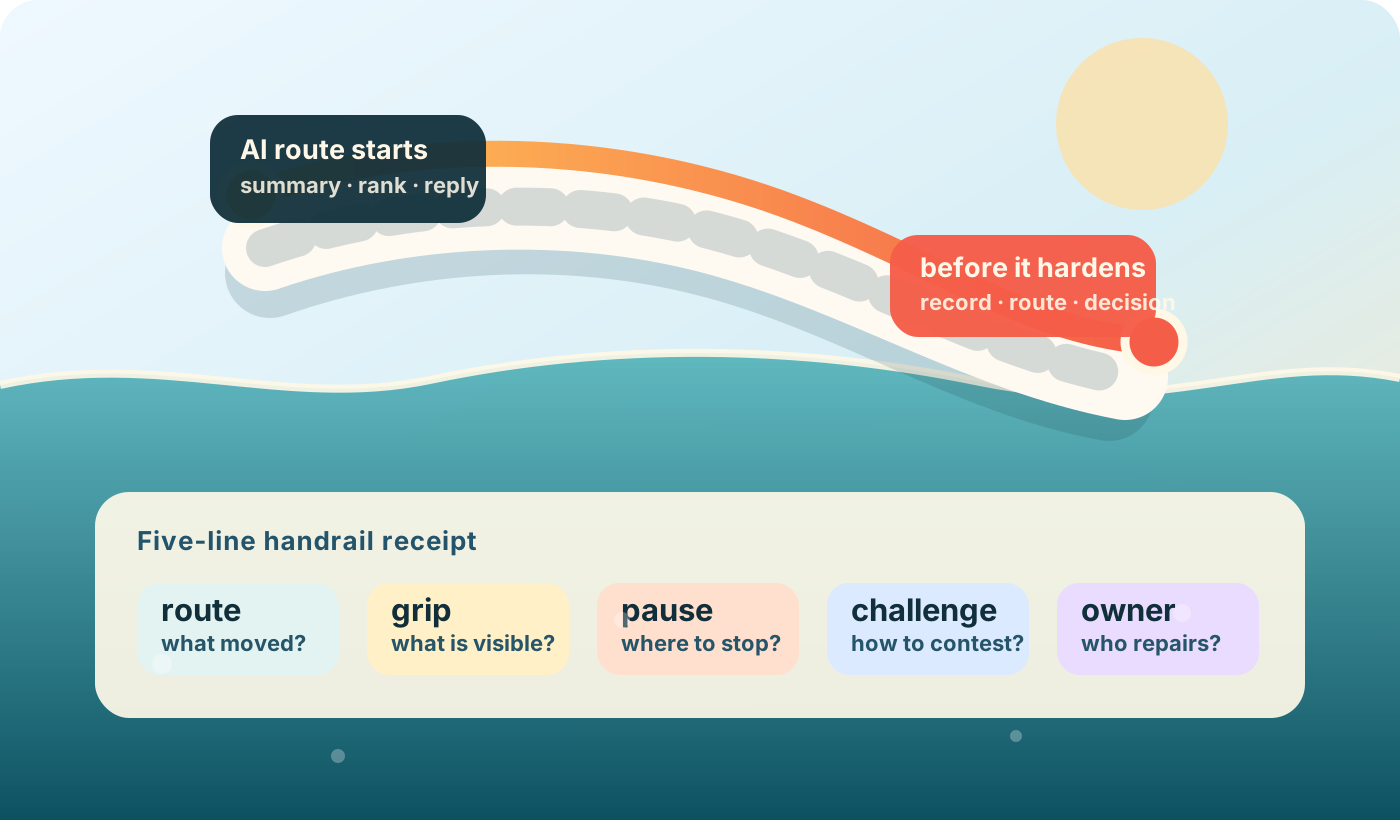
AI workflows become harder to trust when a summary, score, route or reply carries people forward without an obvious grip, pause point or recovery owner.
When an AI output starts moving a record or decision, ask what route started, what is visible, where to pause, how to challenge it and who repairs harm.
A support answer arrives polished. A hiring screen sorts candidates. A school platform drafts feedback. A meeting assistant turns a messy conversation into the official recap. A model dashboard points to a “best” choice. None of these moments has to feel dramatic. The quiet risk is that the person affected has nothing obvious to hold onto.
That is why ordinary AI literacy now needs an AI handrail receipt: a visible way to check whether people can inspect, pause, challenge and recover from an AI-shaped route before it becomes the record, reply, shortlist, score or default next step.
Why this matters now
The AI story is no longer just better chatbots. AI is moving into workflows where people do not only read an answer; they inherit a route. The Anthropic Economic Index frames this as task-level change across ordinary occupations. The EU AI Act and NIST AI Risk Management Framework both push the same practical direction: risk is not just inside the model. It appears in context, oversight, transparency, documentation and human control.
For a non-expert reader, the useful question is not “is this AI impressive?” It is: if this output starts carrying me somewhere, where is the handrail?
The escalator analogy
An escalator is useful because it moves people with less effort. But the safe version still has rails, visible edges, stop buttons, warning lines and somewhere to step off. A frictionless AI workflow can feel like the same convenience without the same visible supports.
A good handrail does not stop all movement. It makes movement survivable. It lets someone steady themselves, notice the edge, ask for help, step off or point to the place where something went wrong.
AI workflows need the same design habit: not a lecture beside every button, but a visible grip at the point where the system starts moving a person, record or decision forward.
The five-line handrail receipt
Use this receipt whenever an AI system summarises, ranks, routes, flags, recommends, drafts, files or replies in a way that might affect someone else:
- Route started: what did the AI move forward — answer, score, record, recommendation, shortlist, route or reply?
- Visible grip: what can the person see, inspect or compare before accepting it?
- Pause point: where can a human stop, slow down or request review before the output hardens?
- Challenge lane: how can someone correct the record, appeal the route or add missing evidence?
- Recovery owner: who is named as responsible when the automated path causes harm, delay or error?
Where to look first
Start with the places where convenience is sold as care:
- Support queues: an AI reply may sound empathetic while hiding source policy, escalation threshold or repair route.
- Schools and universities: feedback tools can shape a learner’s record before a teacher or student sees what evidence was compressed.
- Hiring and HR: ranking, screening and note summaries can quietly frame a human judgement.
- Public services: triage and case summaries can make a route feel official before the affected person can inspect the trail.
- Model leaderboards and procurement decks: a “best” system can become a buying shortcut unless the task, date, wrapper and destination are visible.
The practical habit is simple: when an AI workflow carries something forward, look for the rail before admiring the ride.
Boiling Frogs lens: every consequential AI route needs a handrail receipt: route started, visible grip, pause point, challenge lane and recovery owner.
Sources: Anthropic Economic Index, NIST AI Risk Management Framework, EU AI Act overview.