
The AI agent permission chain: what to ask before software acts for you
A plain-English briefing on the quiet shift from AI that answers to AI that clicks, files, books, buys and edits with borrowed permission.
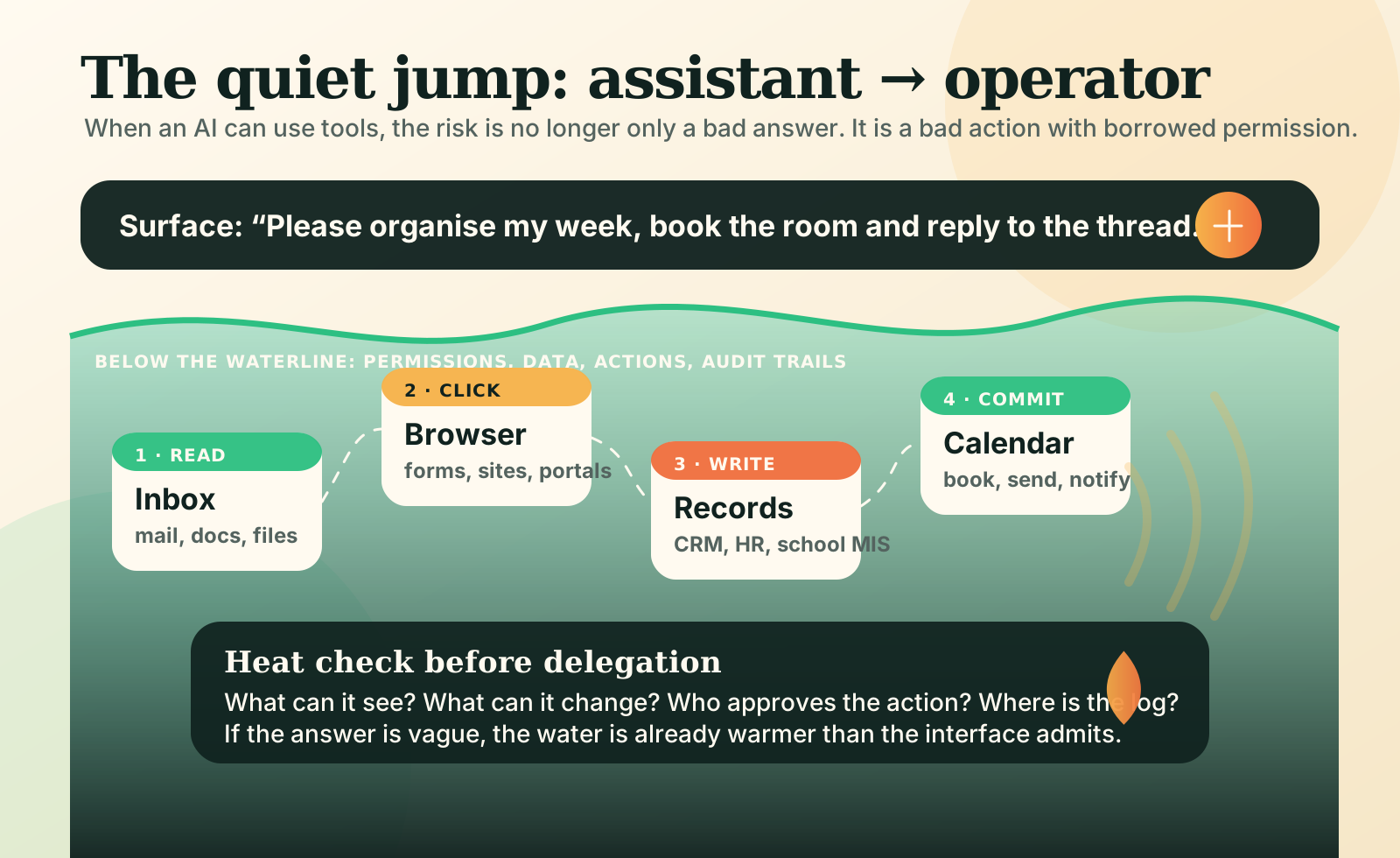
The quiet jump is from answer to action: read, click, write, book and send with borrowed permission.
Before delegating, ask what the agent can see, what it can change, who approves the action and where the log lives.
The next AI shift will not always look dramatic. It may look like a helpful button inside software you already use: let AI organise this, let AI reply, let AI book it, let AI update the record.
That is the quiet jump from assistant to operator. A chatbot gives an answer. An agent can use tools. It can read a mailbox, open a browser, compare documents, fill in a form, update a customer record, file a ticket, schedule a meeting or hand code to another system.
The boiling-frog problem is that each permission feels reasonable in isolation. Read my calendar. Draft the reply. Click the link. Move the file. Confirm the booking. But when those steps are chained together, ordinary software starts to act with delegated judgement.
The signal
Anthropic’s 2024 computer use announcement showed a model operating a computer through screenshots and tool actions rather than only producing text. OpenAI later introduced Operator as an agent that can use a browser to perform tasks.
The exact product names matter less than the direction of travel. AI is moving from answer boxes into control surfaces.
For a non-technical reader, that means the most important question is no longer only “is the answer right?” It is: what can this system do if the answer is wrong?
The everyday version
Imagine a work assistant asked to “sort out the client follow-up”. That could include:
- reading the latest email thread;
- summarising the contract history;
- finding a slot in two calendars;
- drafting a reply;
- updating a CRM record;
- attaching a file;
- sending the message.
None of those actions is science fiction. Most are boring office tasks. That is exactly why the heat rises quietly: the big change hides inside admin.
A school version might be an AI that reviews homework drafts, checks attendance notes and writes parent emails. A household version might compare insurance renewals, fill a form and suggest which button to press. A support-centre version might triage a complaint, draft the refund decision and update the customer file.
The agent does not need to “take over” to matter. It only needs to become the first mover in a chain that humans later skim.
Three permission-chain questions
1. What can it see?
Access is power. A tool that can only rewrite a paragraph is different from one that can read your inbox, drive, browser history, calendar, customer records or school data.
The everyday question: if a person had this access, would you expect training, logging and supervision?
2. What can it change?
There is a sharp line between suggesting and committing. “Here is a draft reply” is not the same as “I sent the reply”. “Here is the likely form answer” is not the same as “I submitted the form”.
The everyday question: where is the final human checkpoint before money, records, messages or rights are affected?
3. Where is the audit trail?
If a human assistant makes a call, you can usually ask what happened. With agents, the action may be spread across prompts, screenshots, tool calls, retrieval steps and system instructions.
The everyday question: could a manager, teacher, parent, customer or citizen reconstruct the path after something goes wrong?
Why this is not just a business-software story
Agentic AI will first feel most visible at work because offices are full of repeatable digital tasks. But the habit can travel quickly into ordinary life.
A browser agent booking a restaurant is convenient. A browser agent comparing energy tariffs is useful. A browser agent handling a benefits form, school portal, medical message or loan application is more serious. The same interface can move from low-stakes convenience to high-stakes delegation without changing its friendly tone.
That is the warmer-water moment: the software still looks like help, but the accountability has moved.
What to watch next
Do not track every agent launch as a novelty. Track the permission chain:
- agents that can use a browser, not just answer in chat;
- workplace tools that can write back into systems of record;
- school or family tools that request access to documents, messages or portals;
- “human in the loop” claims that do not say where the loop sits;
- audit logs that are built for engineers but useless to ordinary users.
The useful rule is simple: the more an AI can see and change, the more boring governance becomes important.
Ask before the water warms: what can it see, what can it change, who approves the action, and where is the log?