
The Boiling Frog Problem: Why AI Change Feels Sudden
AI progress has been building for years, but many people only noticed when the effects became visible. This is why the change feels sudden — and why awareness matters now.
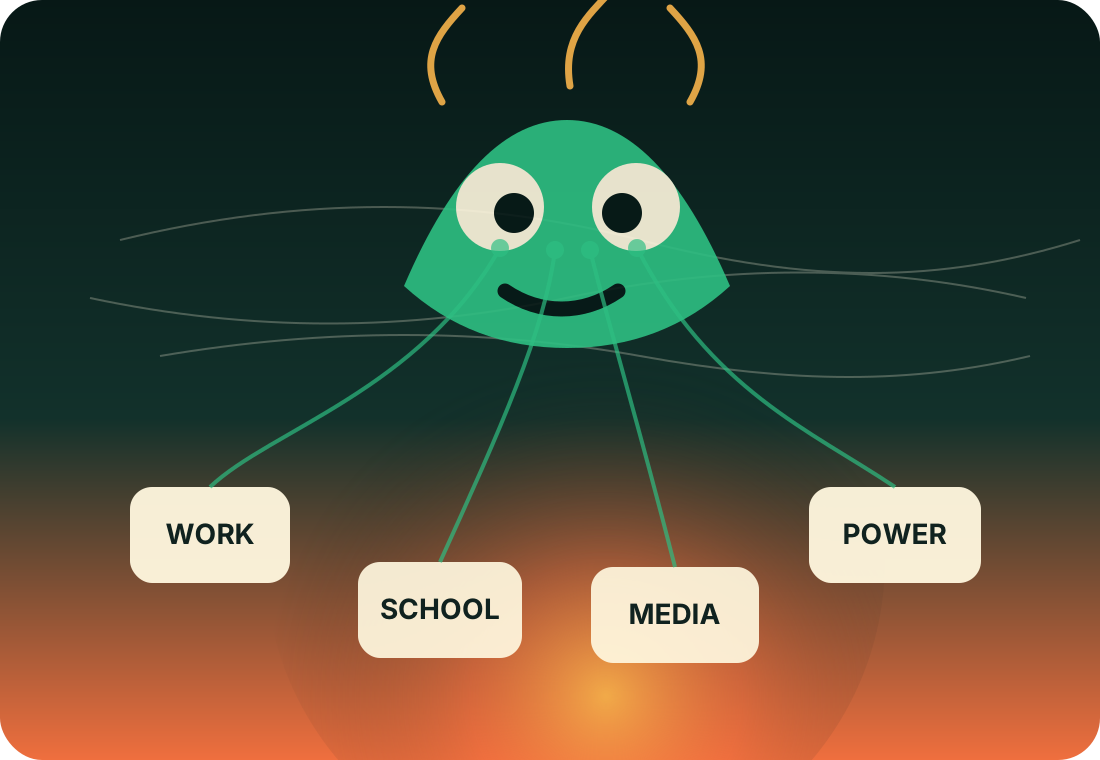
Gradual change is easiest to miss when each step feels reasonable.
The water warms in email, schoolwork, search, support, media and workplace decisions.
Artificial intelligence did not arrive overnight. Researchers, engineers, and technology companies have been building toward today’s systems for decades. But for most people, AI stayed in the background: recommendation engines, search rankings, spam filters, route planners, voice assistants, and automated decisions hidden inside apps and services.
Then generative AI made the invisible visible.
Suddenly, ordinary users could ask a system to write, summarise, code, draw, analyse, plan, and converse. The leap felt dramatic not because there had been no progress before, but because the progress crossed a threshold that people could personally experience.
That is the boiling frog problem of AI.
Change accumulates gradually, then recognition arrives all at once. By the time society notices the water is hot, the systems may already be deeply embedded in work, education, media, markets, public services, and personal life.
The point is not panic. The point is awareness.
If we understand the trajectory early enough, we can ask better questions:
- Which tasks are being automated or augmented?
- Who benefits from these systems?
- Who becomes more dependent on them?
- What skills become more valuable?
- What risks are being normalised before they are debated?
- How should schools, employers, families, and governments adapt?
Boiling Frogs exists to make the temperature visible. AI is not just a technical topic. It is a social, economic, educational, and political force. The more clearly we understand it, the better prepared we are to shape its impact rather than simply react to it.