
The hidden compute bill behind every AI answer
A plain-English briefing on why AI now feels weightless on a phone while becoming heavy infrastructure in the real world.
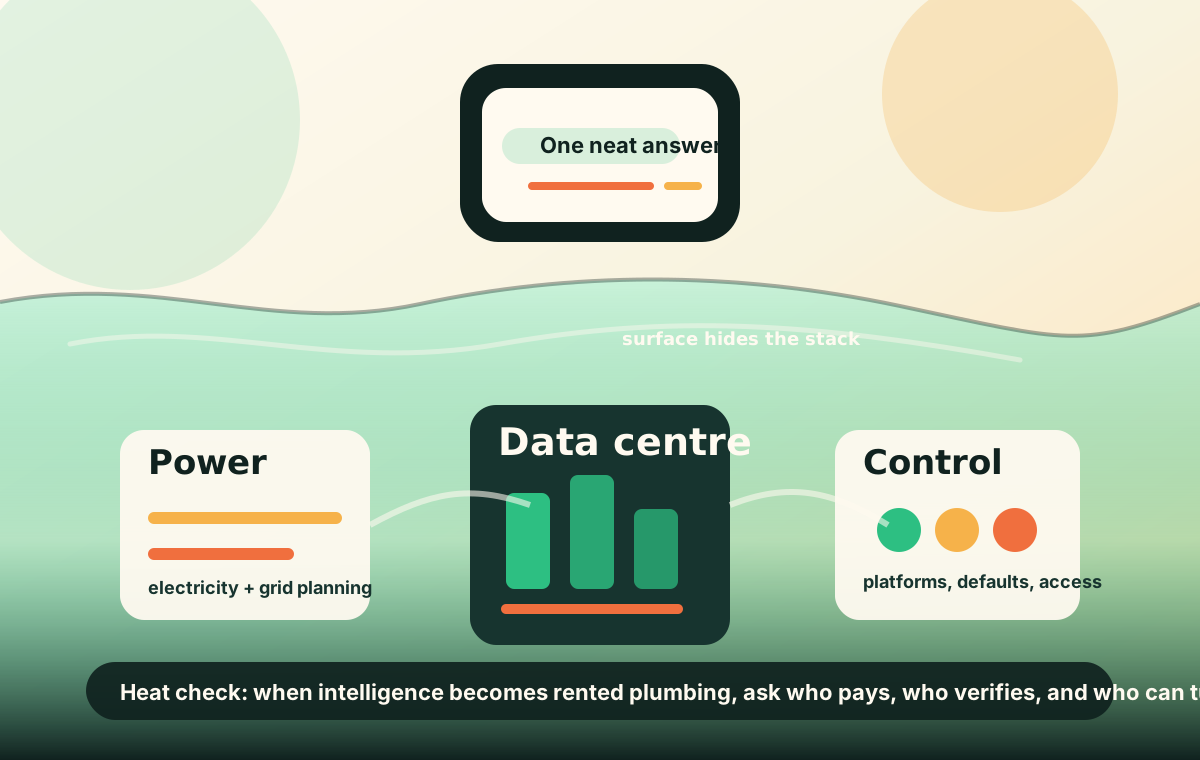
AI feels weightless at the prompt box while the real-world stack gets heavier.
The chatbot is the tap; the data centre, cloud contract, energy demand and defaults are the plumbing.
AI often arrives as a tidy text box. Type a question, receive an answer, move on.
That interface is designed to feel weightless. The important shift is that the system behind it is becoming very heavy: data centres, chips, electricity, cooling, cloud contracts, model access rules, safety testing and platform defaults.
The boiling-frog problem is that the convenient surface hides the infrastructure underneath. By the time a chatbot feels like normal plumbing for work, school, search or customer service, the big decisions about cost and control may already have been made elsewhere.
The signal
The IEA’s 2025 Energy and AI report frames AI as part of a wider electricity and data-centre build-out, not just a software trend. Stanford’s AI Index 2025 also tracks the scale of private AI investment, including $109.1bn of U.S. private AI investment in 2024.
Those numbers can sound abstract. In everyday life, they mean this:
- the “free” answer may be subsidised by a platform trying to own the habit;
- the simple office assistant may depend on a cloud stack your organisation cannot easily inspect;
- the helpful school tool may route student work through infrastructure chosen far from the classroom;
- the search result may become less like a library index and more like a rented answer pipe.
Why the tap metaphor matters
A tap is simple for the person using it. Turn it, water arrives.
But the important questions are not at the tap. They are in the pipes, reservoirs, treatment systems, meters, maintenance contracts and rules about who gets priority when supply is tight.
AI is starting to look similar. The prompt box is the tap. The model, data centre, electricity contract, retrieval system, moderation layer and account permissions are the plumbing.
That does not mean the tap is bad. It means a serious reader should ask plumbing questions.
Three heat checks
1. Who pays when the interface looks free?
If an AI tool is bundled into email, search, documents or school software, the bill may not appear as “AI”. It may appear as higher subscription tiers, cloud lock-in, advertising dependence, data access, compute demand or fewer choices later.
The everyday question: what habit is being built before the price is obvious?
2. Who can inspect the answer path?
A traditional document can show a source trail. An AI answer may compress search, ranking, generation and rewriting into a confident paragraph.
That compression is useful. It is also where accountability can disappear.
The everyday question: can a teacher, manager, journalist, customer or citizen see enough of the path to challenge the result?
3. Who controls the shut-off valve?
When teams become dependent on AI summaries, coding assistants, support bots or document workflows, the real power may sit with the provider that controls access, model changes, pricing, safety filters and terms of use.
The everyday question: what breaks if the provider changes the rules on Friday afternoon?
What to watch next
Do not only follow model names. Follow the plumbing:
- data-centre planning fights and electricity demand forecasts;
- cloud and chip partnerships that decide who can afford frontier systems;
- workplace AI tools that become default settings rather than optional experiments;
- public-sector or school AI contracts that move judgement into vendor systems;
- safety-testing announcements, such as CAISI’s frontier model testing agreements, and what they do — and do not — cover.
The warmer-water version of the story is not “robots replace everything”. It is quieter: ordinary people begin to rely on a tap whose plumbing they cannot see, price or challenge.
That is the moment to notice the heat.