
The Week Frontier AI Moved Into the Test Chamber
A May 2026 US agreement with Google DeepMind, Microsoft and xAI shows the Boiling Frogs pattern in action: powerful AI is becoming infrastructure before most people understand the risks being tested.
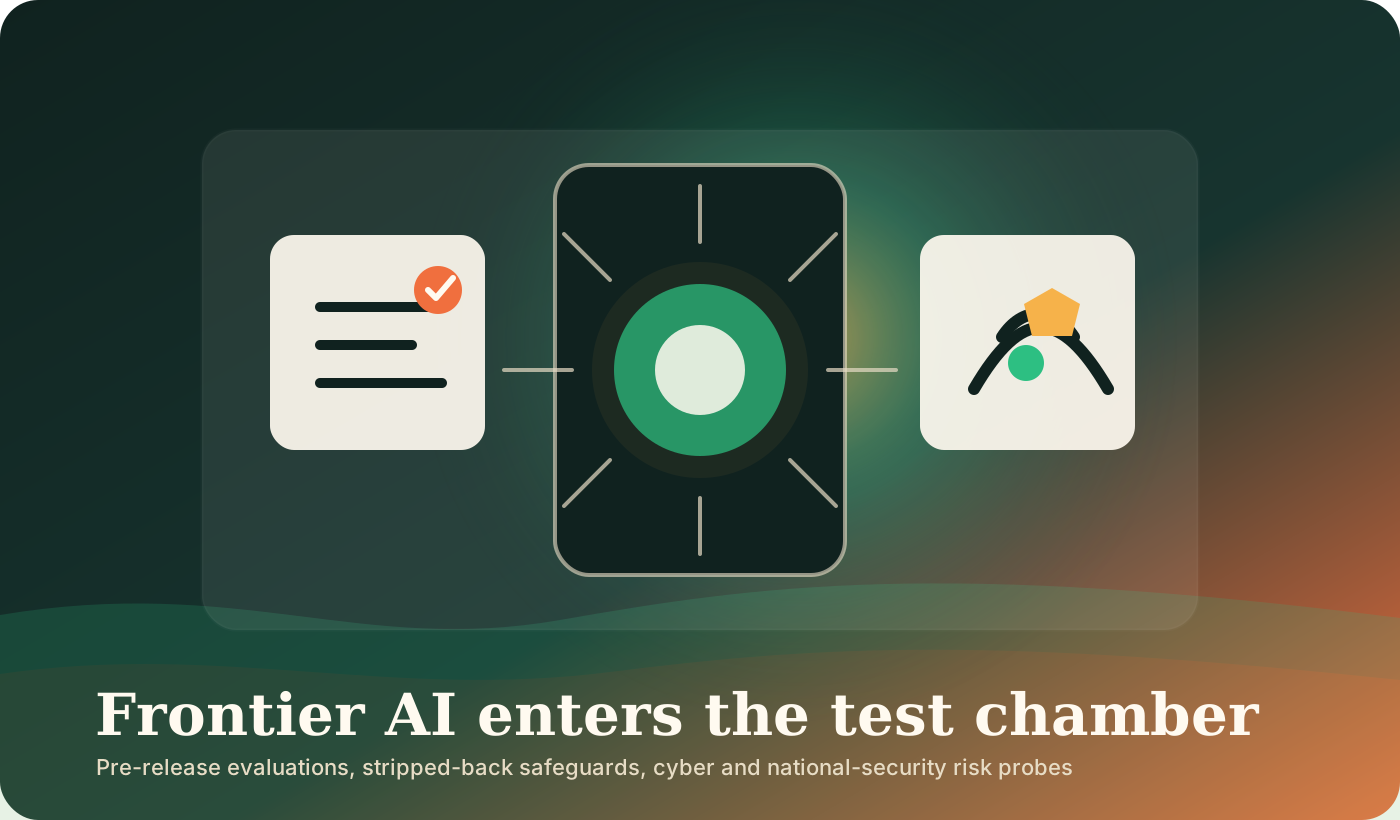
Pre-release testing is becoming part of the AI supply chain.
The model tested upstream may later sit inside school, work, search, media or code tools downstream.
On 5 May 2026, the US government announced that Google DeepMind, Microsoft and xAI had signed agreements allowing the Center for AI Standards and Innovation (CAISI), housed at the Department of Commerce’s National Institute of Standards and Technology, to evaluate frontier AI models before public release.
That sounds procedural. It is not.
It is a sign that the AI story has moved into a new phase: the most capable systems are now important enough that governments want to examine them before ordinary users, companies, schools and public bodies absorb them into daily life.
What happened this week
According to NIST’s announcement, CAISI will conduct pre-deployment evaluations and targeted research with Google DeepMind, Microsoft and xAI. The agency says these agreements let government evaluators assess models before they are publicly available, continue post-deployment assessment, and run research into AI capabilities and security risks.
The important detail is not just that the companies are cooperating. It is what the testing is for.
NIST says developers may provide models with safeguards reduced or removed so evaluators can probe national-security-related capabilities and risks. Evaluators across government can feed into the process through the TRAINS Taskforce, an interagency group focused on AI national-security concerns. CAISI also says it has already completed more than 40 evaluations, including on unreleased state-of-the-art models.
Al Jazeera’s report framed the same development around a growing Washington concern: powerful systems could supercharge cyberattacks or be misused before safeguards, institutions and public understanding catch up.
That is the Boiling Frogs mission in one news story.
The water is not heating because one chatbot got a better personality. It is heating because AI has become consequential enough to be tested like strategic infrastructure.
Why this matters beyond Washington
Most people will not interact with CAISI. They will not read pre-deployment evaluation reports. They will not know which model version was tested, what guardrails were present, or which risky capabilities were found.
But they will still live downstream of the decision.
The same model family may later appear inside:
- a work assistant that can read documents, send messages and make recommendations;
- a school or university tool that grades, tutors or flags misconduct;
- a coding assistant that can modify production systems;
- a customer-service workflow that decides who gets escalated;
- a search or media product that shapes what feels true;
- a cyber tool used by defenders, attackers, or both.
This is why the story is bigger than “the government is testing AI”. The real story is that capability, safety, procurement, national security and everyday software are starting to merge.
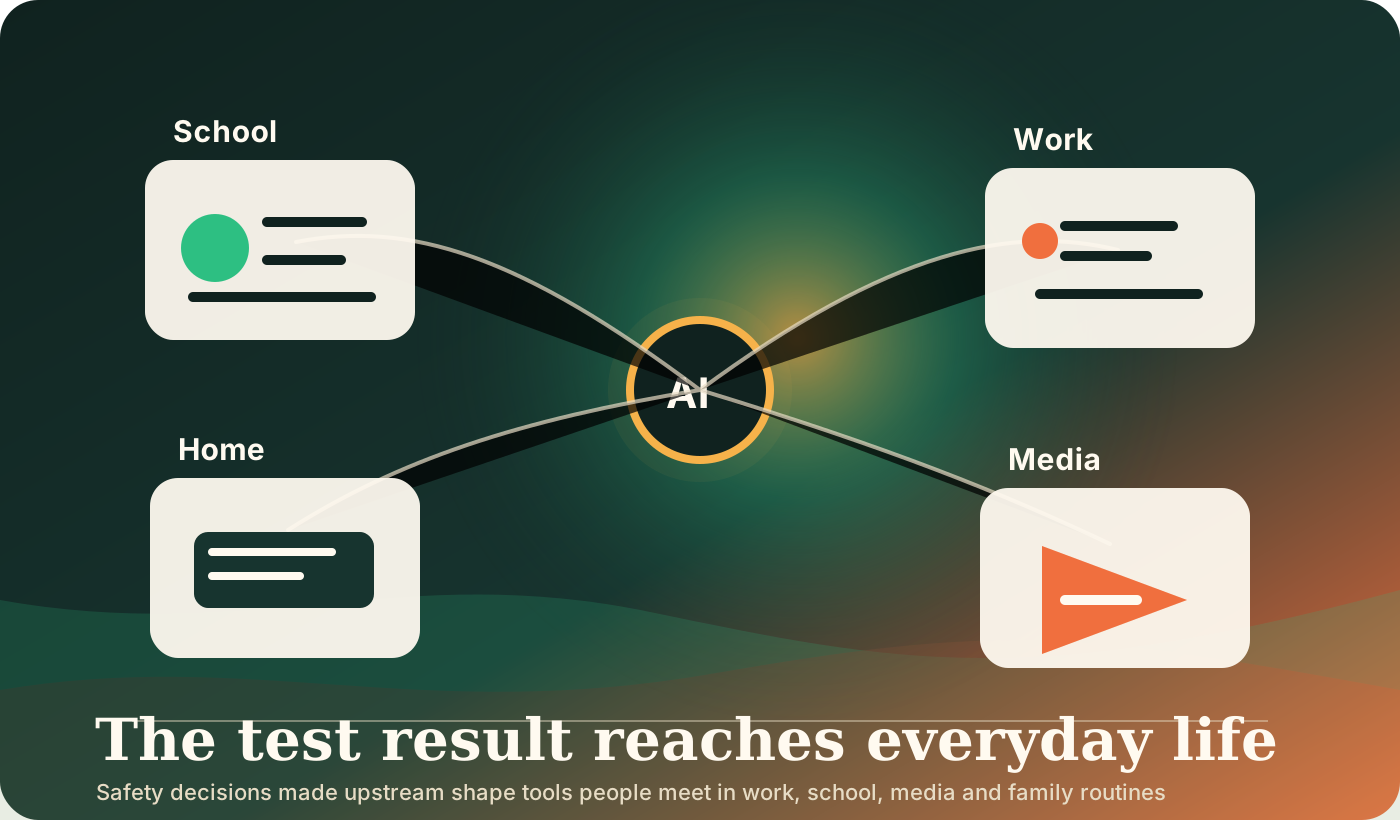
The quiet shift: from product launch to pre-release governance
For much of the consumer internet era, new products arrived first and governance followed later. A platform launched. People adopted it. Problems appeared. Regulators, courts, schools, employers and families tried to catch up.
Frontier AI compresses that cycle.
A single model can be copied into thousands of downstream products. It can write code, generate images, mimic voices, search files, summarise confidential material, advise professionals, produce persuasive text and interact with tools. When that capability improves, the change does not stay in one app. It spreads through the software layer.
That is why pre-release testing matters. It is an attempt to inspect some of the heat before the water reaches everybody else.
But it also raises hard questions:
- Who sees the results of these evaluations?
- Which risks are treated as unacceptable?
- How do public-interest concerns compare with commercial speed?
- What happens when safety concerns conflict with national-security or military use?
- How should schools, companies and families interpret “tested” without assuming “safe”?
None of those questions is solved by the existence of a testing agreement.
The danger of false reassurance
A tested model is not the same as a harmless model.
Testing can reveal risks, improve safeguards and create accountability. But AI systems are not static machines. They are deployed into messy environments, connected to tools, prompted by creative users, updated over time and embedded inside organisations with their own incentives.
The risk is that the label “government tested” becomes a comfort blanket. People may assume that if a system passed through a formal process, the broader social impacts have been handled.
They have not.
A safety lab can test some capabilities. It cannot automatically answer whether a school is over-relying on automated detection, whether a company is quietly replacing judgement with model output, whether a family can spot synthetic media, or whether a worker understands when an AI agent is acting on their behalf.
That is the practical Boiling Frogs lesson: institutional testing is necessary, but public literacy is still required.
What to watch next
This story is worth following because it sits at the intersection of several slow-heating trends:
- Frontier models are becoming strategic assets. When governments want early access, AI has moved beyond consumer novelty.
- Safety is becoming geopolitical. The same capabilities can matter for cyber defence, offence, military planning, research acceleration and economic competition.
- Enterprise buyers may start treating approval signals as procurement signals. A model’s relationship with government testing could affect trust in regulated sectors.
- Everyday users remain several steps removed. The public sees a friendly interface; the real decisions happen in model labs, standards bodies, infrastructure deals and enterprise contracts.
- The meaning of “AI literacy” expands. It is no longer only prompt-writing. It is understanding capability, provenance, risk, incentives and downstream effects.
The Boiling Frogs takeaway
This week’s agreement is not a distant policy footnote. It is a temperature reading.
If frontier AI models now need pre-release national-security evaluation, then the public conversation must also mature. We should still ask whether AI can help us write, learn, design and work faster. But we also need to ask where the model came from, who tested it, what it can do without guardrails, who benefits from deployment, and what happens when those systems are quietly woven into normal life.
The water gets warmer when powerful technology becomes ordinary before people understand it.
This week, the test chamber became part of the story.