
The AI investment thermostat is turning into everyday heat
The loud AI story is model launches. The quieter reader story is capital, adoption, work habits and electricity turning AI from a clever feature into shared infrastructure.
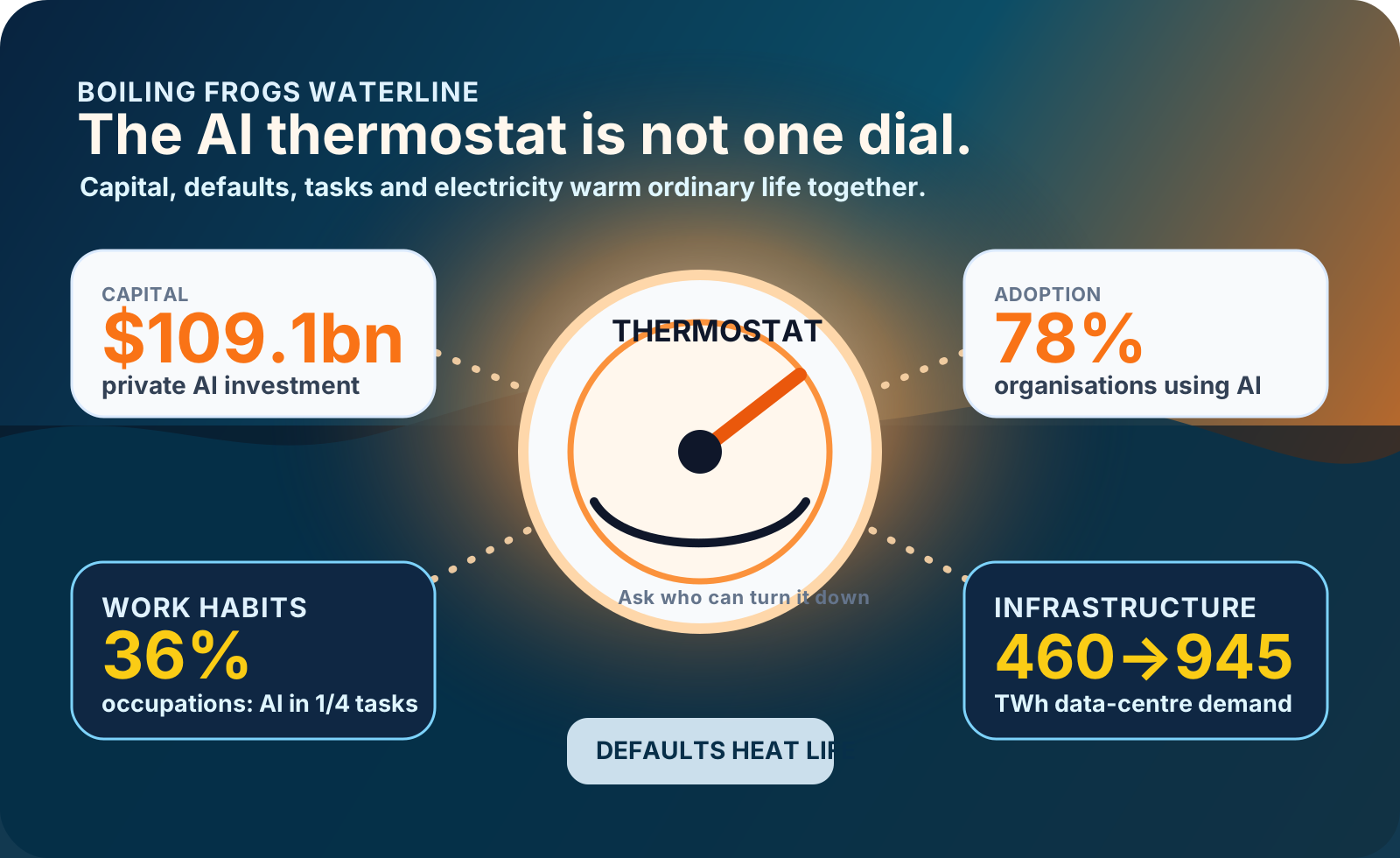
AI becomes harder to notice when investment, software defaults, workplace habits and physical infrastructure warm up together.
When a product says AI is built in, ask who set the default, which task changed first, where the meter is and who can turn it down.
A frontier model launch is the splash. The warmer water is underneath it: money, work habits, office defaults and data-centre demand moving at the same time.
That is why the useful question is not only what can the newest model do? It is what ordinary system is being rebuilt around the assumption that AI will be there?
Read the current AI economy like a thermostat, not a fireworks display. One dial turns up capital. Another turns up workplace adoption. Another turns up the physical bill. By the time people notice the room feels different, the settings may already be normal.
Three dials that make AI feel inevitable
| Thermostat dial | Current signal | Everyday translation |
|---|---|---|
| Capital | Stanford’s 2025 AI Index reports $109.1bn in U.S. private AI investment in 2024. | The race is not only better chat; it is who can afford models, chips, distribution and defaults. |
| Adoption | Stanford reports 78% of organisations used AI in 2024, up from 55% the year before. | AI stops feeling like a trial when the default software stack already includes it. |
| Work habits | Anthropic’s Economic Index found 36% of occupations show AI use in at least a quarter of tasks. | Jobs often change task by task before anyone changes the job title. |
| Infrastructure | The IEA says data-centre electricity demand could rise from about 460 TWh in 2022 to around 945 TWh by 2030. | The “magic” answer box is also chips, cooling, grid capacity, cloud contracts and local planning. |
Put together, those dials explain the Boiling Frogs problem. Each single step can sound reasonable: a better draft button, a cheaper coding assistant, a helpful search summary, a faster support queue. The systemic change is the accumulation.
The office analogy: AI as central heating
A plug-in heater is obvious. You see it, switch it on, and know which corner of the room changed.
Central heating is different. Once it is installed, people stop asking whether the room is being warmed. They ask why the room is cold.
That is the shift now happening with AI. A visible chatbot is the plug-in heater. AI inside email, documents, search, design tools, customer support, code review and management dashboards is central heating. It becomes part of the room.
The practical reader move is to look for the thermostat:
- Who set the default? Is AI on by choice, policy, procurement bundle or product update?
- Which task got warmer first? Drafting, ranking, summarising, routing, judging, coding, creating or approving?
- Where is the meter? Can users see cost, evidence, energy, data use and error rates?
- Who can turn it down? Is there a genuine opt-out, appeal route or human checkpoint?
Why this is a public story, not a tech story
The investment numbers tell us where capability will be pushed. The adoption numbers tell us where ordinary people will meet it. The electricity numbers remind us that “digital” is still physical.
A school does not experience AI as a benchmark chart. It experiences students arriving with machine-polished drafts, teachers being offered grading tools, and families needing new evidence habits.
A small business does not experience AI as a model architecture. It experiences cheaper marketing copy, faster spreadsheets, more synthetic media, and pressure to automate customer responses because competitors already have.
A council, charity or public service does not experience AI as a demo. It experiences procurement promises, triage tools, data-sharing questions and citizens who still need a responsible human to answer for the outcome.
The reader receipt
When a product pitch, news story or workplace memo says “AI is now built in”, ask for the receipt before accepting the new room temperature:
- Default: Was it chosen by users or bundled into the software?
- Evidence: What source proves it works for this task, not just a nearby benchmark?
- Cost: What does the habit cost at scale — money, energy, attention and dependency?
- Control: Who can pause, appeal, inspect or reverse the AI step?
- Landing place: Where will a non-expert meet the output first — inbox, classroom, search result, support queue, hiring screen, design brief or council form?
The future does not arrive as one boiling moment. It arrives as a thermostat that keeps being nudged upward.
Boiling Frogs lens: do not only watch the splashy model release. Watch the dials: capital, defaults, tasks and infrastructure. That is where the water gets warmer before the room has a name for it.
Sources: Stanford HAI AI Index 2025, Anthropic Economic Index, IEA Energy and AI.