
The AI consent receipt: before agents click for you
A plain-English briefing on browser-using AI agents: why the next heat check is not only what an AI says, but what it can see, click, file, buy or send on your behalf.
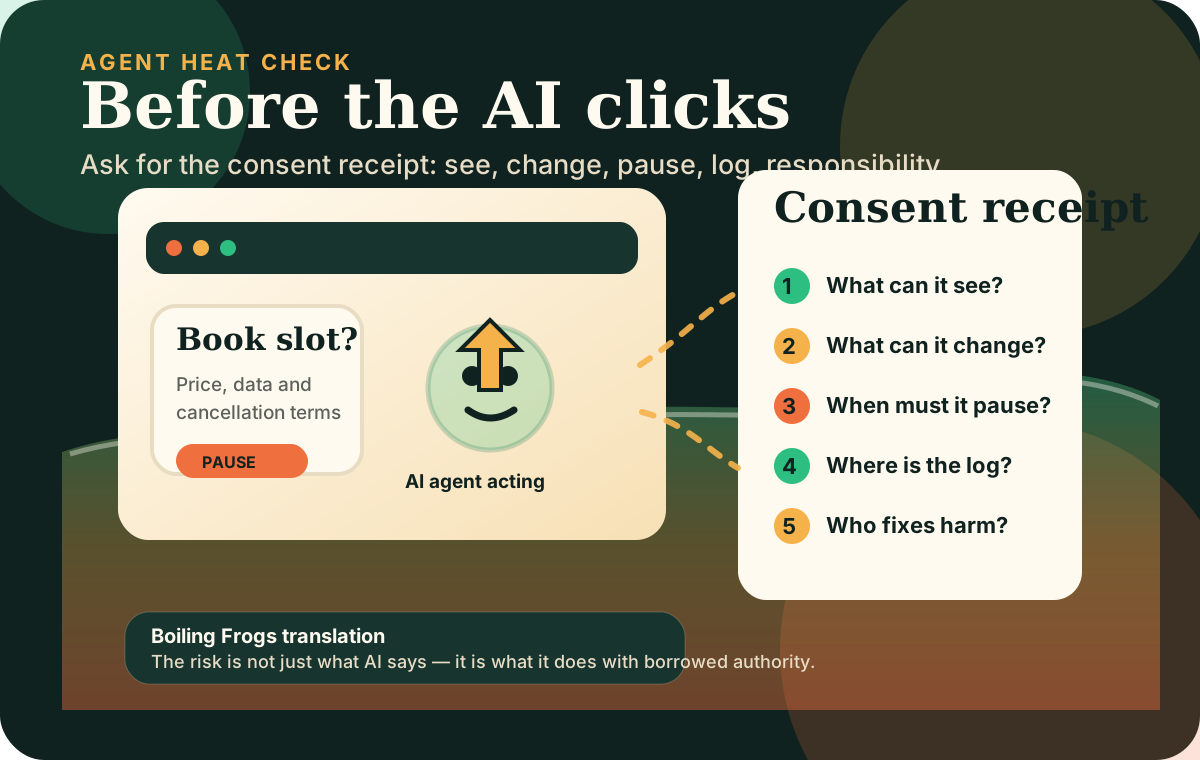
Browser-using agents change the question from what the AI says to what it can do with a person’s permissions.
Before delegating a real task, ask what it can see, what it can change, when it must pause, where the log lives and who fixes harm.
The quietest AI change is not a more fluent paragraph. It is the moment the assistant stops answering and starts doing.
A chatbot that drafts a reply is useful. An agent that opens a browser, reads a page, fills a form, compares options, books a slot, updates a record or sends a message has crossed a different line. It has moved from advice into delegated action.
That does not make agents bad. It makes them the kind of tool that needs a receipt.
The signal
The direction is visible in public product work. Anthropic described its computer-use capability as a way for Claude to look at a screen, move a cursor, click buttons and type text. OpenAI introduced Operator as an agent designed to use a browser for tasks. Stanford HAI’s 2025 AI Index gives the wider backdrop: 78% of organisations reported using AI in 2024, up from 55% a year earlier.
The everyday translation: the agent layer will not arrive only as a spectacular robot. It will arrive as a normal button beside the booking form, inbox, customer record, expense portal, shopping basket, school platform and council service.
Why a receipt matters
When a person takes an action, we usually have clues: who clicked, when they clicked, what screen they saw, what they meant to do, and who can correct a mistake.
AI agents blur those clues. The instruction may be vague. The screen may contain sensitive context. The agent may take a step that feels administrative but changes a real outcome. A cheap convenience can quietly become a permissions problem.
Think of an agent like a helpful stranger borrowing your keys in a large building. It may find the right office faster than you. But before handing over the keys, you want the basics written down:
- which doors it can open;
- whether it can only look or also change things;
- when it must come back for approval;
- where the log lives;
- who fixes damage if it opens the wrong door.
That is the AI consent receipt.
Where the water warms first
The inbox assistant that can send
The jump from “draft this” to “send this” feels tiny in the interface. In real life, it changes accountability. A rushed manager may approve a message they barely read because the AI sounded plausible.
The heat check: does the system separate drafting from sending, and does the human review the exact final text?
The shopping or booking agent
An agent that compares flights, fills forms or buys groceries can save time. It can also make assumptions about price, privacy, cancellation terms, accessibility needs or what counts as “best”.
The heat check: what preference did the agent optimise for, and was the trade-off visible before money moved?
The workplace record update
Customer support, HR, finance and operations systems are full of small actions that look clerical but affect people: categorise a complaint, flag a candidate, update a refund, close a ticket, escalate a case.
The heat check: which fields can the agent change, and who audits the pattern of changes across many cases?
The school or family account
A household agent that manages calendars, learning tools or subscriptions may touch children’s data and routines. Convenience is not the same as consent.
The heat check: can a parent, teacher or student see what the agent did and undo it cleanly?
The five-line consent receipt
Before trusting an agent with a real task, ask for a receipt simple enough that a non-specialist can read it:
- What it can see: pages, files, messages, accounts, location, payment details or records.
- What it can change: read-only, draft-only, click-only, send, buy, book, delete, file or escalate.
- When it must pause: spending money, contacting another person, changing a record, sharing data or making an irreversible choice.
- Where the log lives: a human-readable history of instructions, screens, sources, clicks and final outputs.
- Who is responsible: the person, employer, vendor or institution that can correct mistakes and absorb harm.
The boiling-frog risk is not that every agent will run wild. It is that action becomes normal before permission becomes legible. Once the interface teaches people to say “just handle it”, the important question moves from “what did the AI answer?” to “what did it do with my authority?”